
ACL Rehab - Case Study - Part 1
Luke Doyle (Ultimate Frisbee player) volunteers himself for this series

This is the start of a short series that will follow Luke Doyle (Ranelagh Ultimate Frisbee Player) as he progresses through his ACL-reconstructive surgery using the TOP Post-Op ACL Program and regular physio check-ins with me.
Luke unfortunately injured himself while playing London Invite 2025 - a high level Ultimate Frisbee tournament. It was in the first game, just a few points in. He made a change of direction cut on defence and fell to the ground. I was watching from the sideline and knew instantly this was not good. However his pain levels were above what I would have expected for an ACL tear alone. Paramedics on the scene assessed him and while they palpated his knee the tibia clicked - showing that the knee had actually dislocated at the tibiofemoral joint and during palpation the paramedic had put it back into place.1
This meant there was some hope that maybe the ligaments would still be intact (likely torn but maybe not completely) but unfortunately this turned out not to be the case. There was a complete ACL rupture along with a grade 2 medial collateral ligament sprain and subchondral fractures to the lateral tibia plateau and lateral femoral condyle.
Before the Operation
Luke started on some rehab before the operation. There is a lot of muscle loss with the surgery so it’s good to have as much going in as you can. As well as all that, it’s a good time to learn some of the movements that you’ll be doing after the operation.
His surgery took place on the 30th of Jul 2025. A patella graft was used.
After the Operation
Session 1 - 13 days after surgery
Flexibility
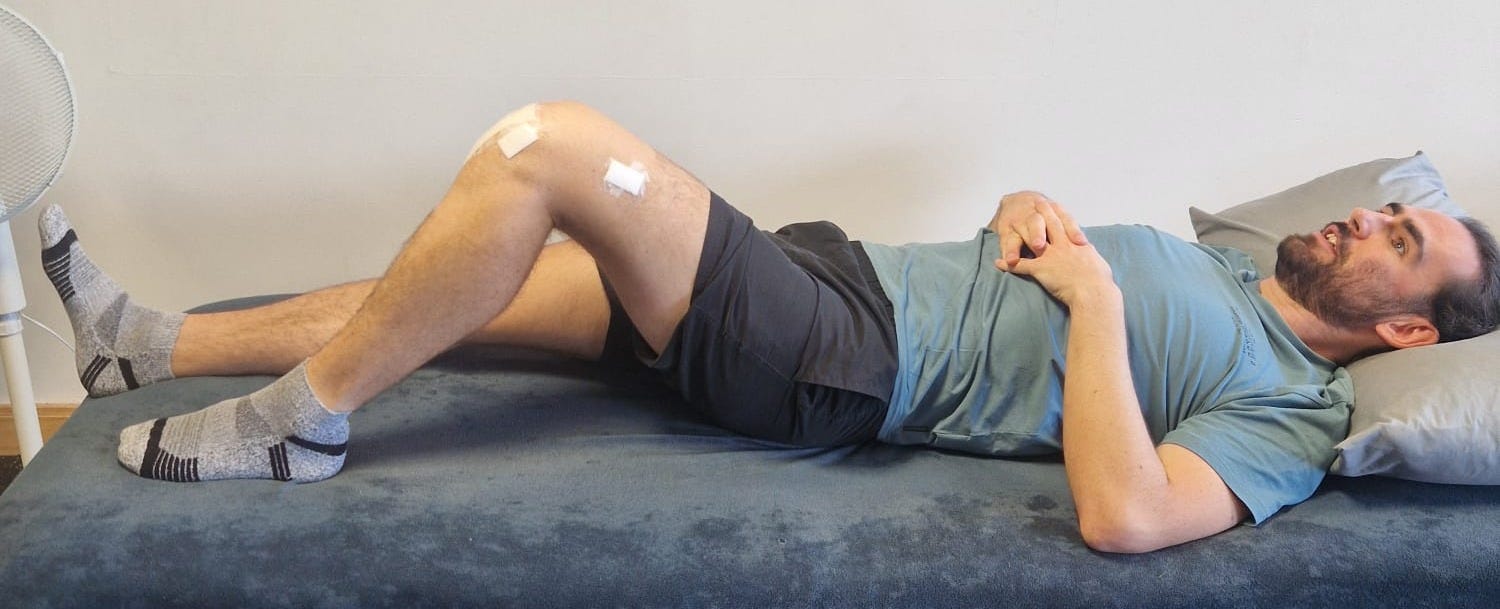
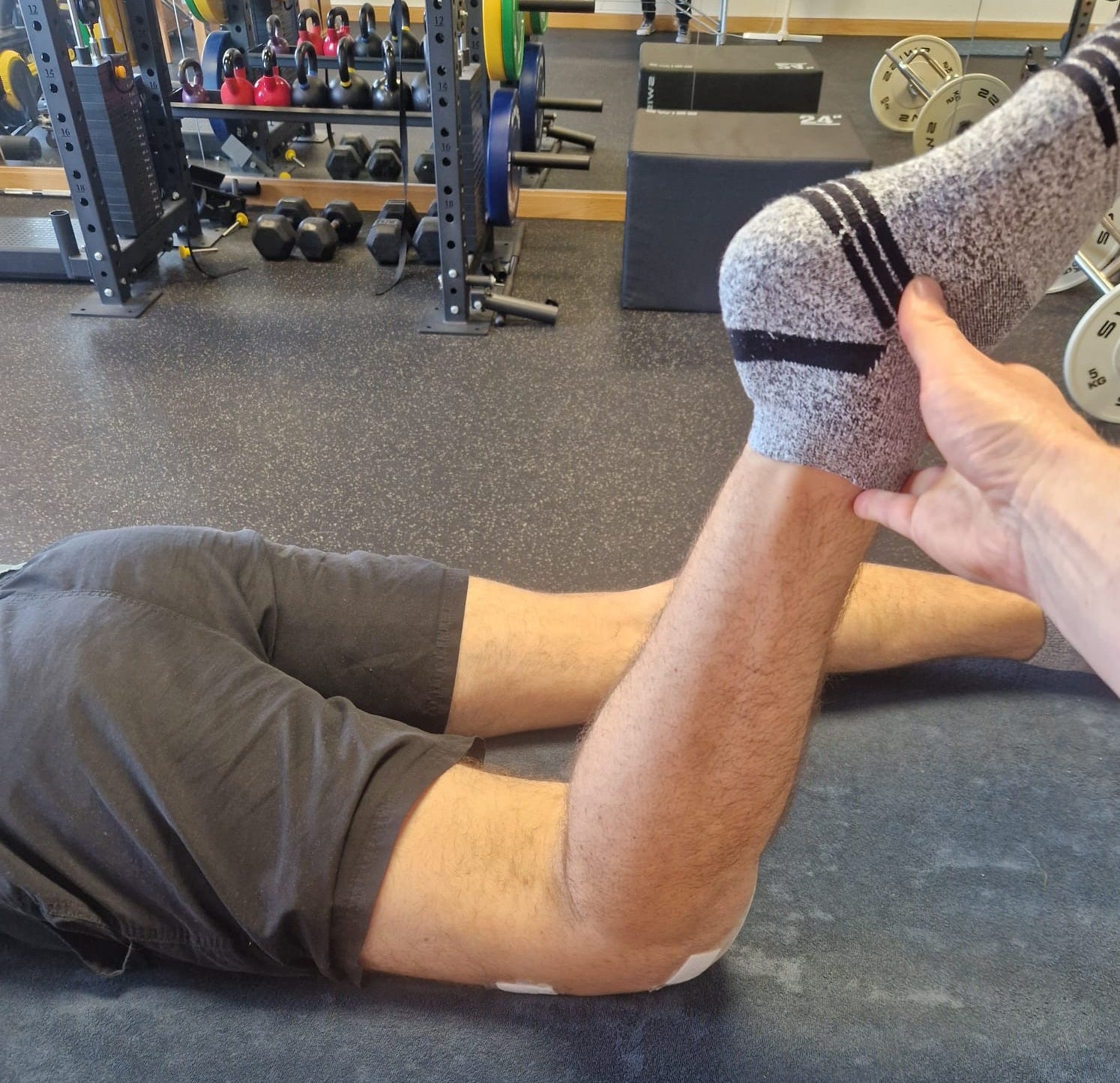
I’ve seen a massive range for speed of recovery in knee flexion after ACL surgeries. So I’m never worried about where it starts off. Here you can see that Luke is shy of 90 degrees.
Bruising
Just a quick note on how little bruising was visible. This is definitely less common as I normally see legs like this:
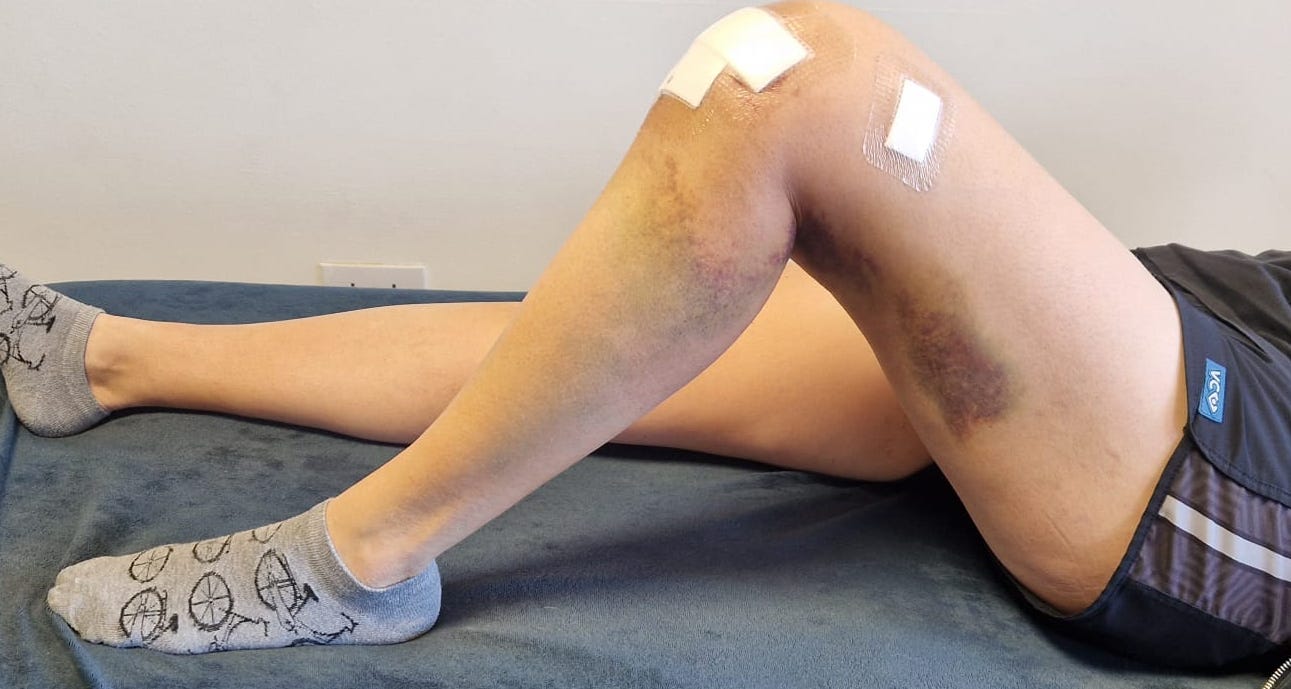
This is a good example of how everybody is unique. Luke says he has never been the type to bruise or swell easily and so this is in line for what’s normal for him. So just in case you’re looking at this as an ACL-R patient, I wanted to show the variance between people so you’re not concerned if you’re more similar to the purply-green leg above.
Gait
What I was more concerned with in the first session with Luke was how guarded he was when walking. Notice how the knee never really changes its angle as he’s carrying the leg through like a plank of wood! He neither wants to bend or straighten it and he hops to turn himself back the other way.
There was some pain in his knee (anterior and posterior, depending on the movement) which was to be expected from all the scarring and swelling that would be present after surgery. His neurokinetic testing on the bed was very good, showing no fear of force production through his leg.
Session 2 - 3.5 weeks after surgery
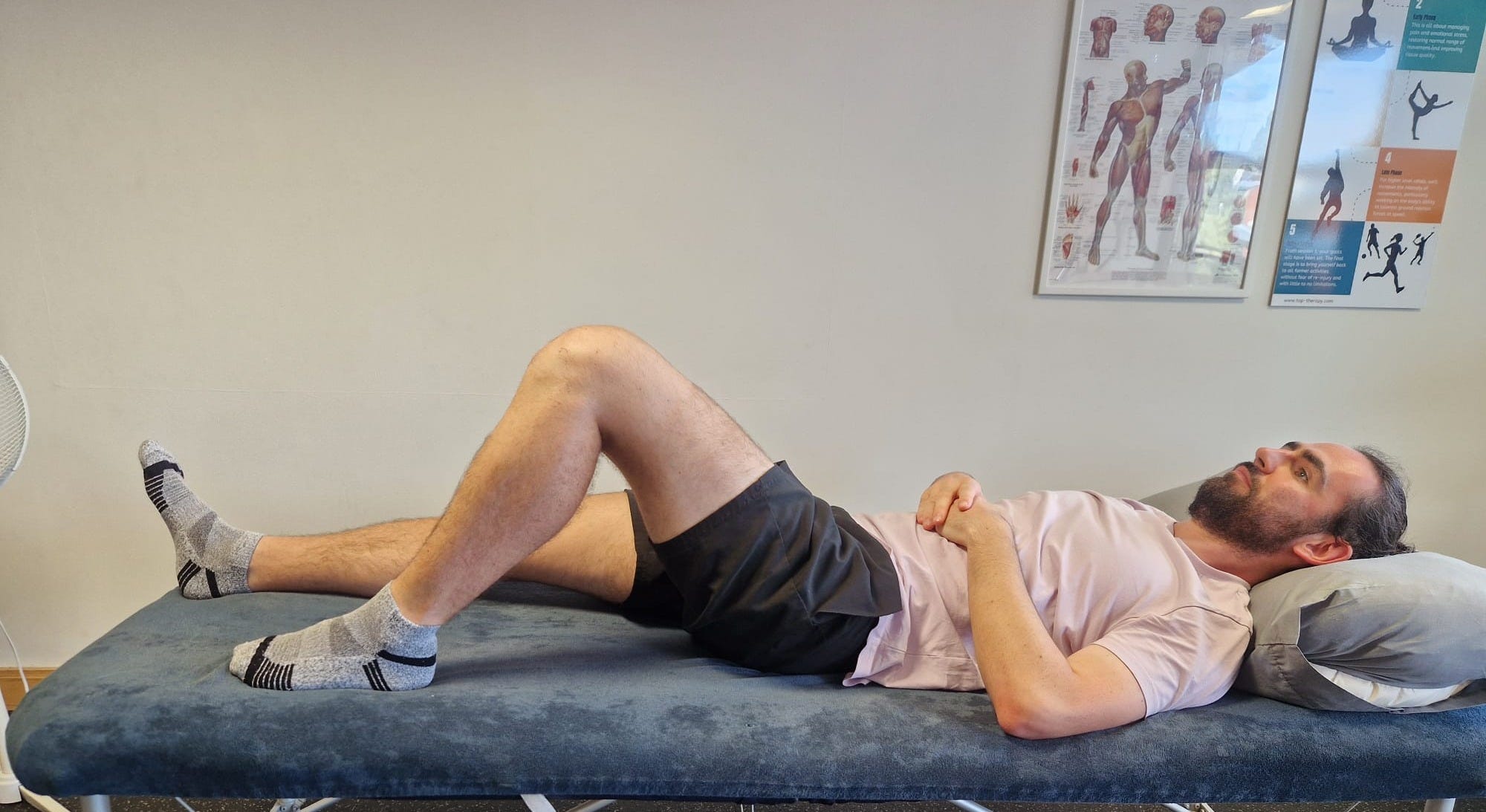
Flexibility
Extension - straightening the knee - was full by session 2: this is more important to get back as quickly as you can after an operation than flexion as it’s associated with a higher risk of re-injury if it isn’t reinstated. Quadriceps inhibition would be a particular concern and an inability to fully straighten the knee would lead to limited capacity for functional movements like walking, running and jumping. A knee that won’t fully straighten might also indicate an ACL that is too tight (although a tight ACL is partly what the surgeon is trying to do to make it stronger than the one you had before2).
Gait
Luke’s gait was still guarded. He was avoiding heel striking this time so we did some backwards walking, then with resistance using a cable machine. I noticed his gait improved right away but he reverted back to his original limp before he left.
If you ever think an exercise can trump your psychology/beliefs, think again. Rather than fight it, I let it be as I was just happy to see that his body could actually get into a normal walking pattern. I knew that when he got to a place where he felt more confident with the knee, his walk would improve itself naturally.
Squat
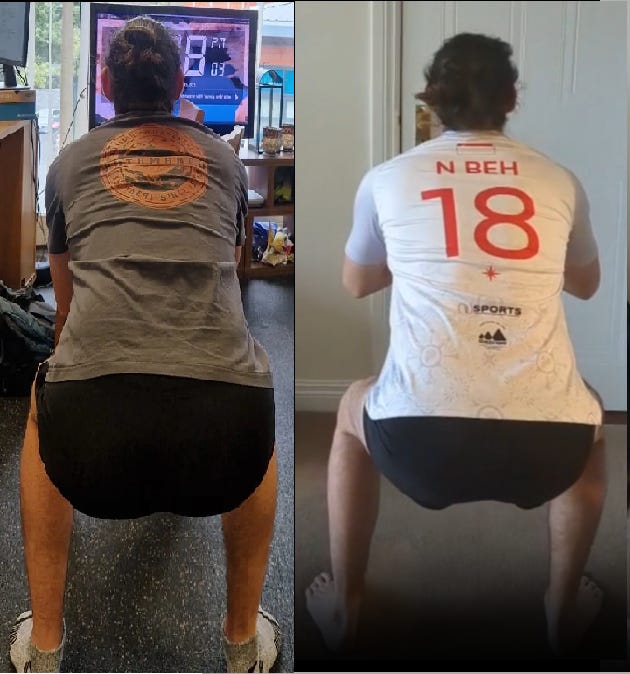
I observed Luke’s squat from session to session. This is how it looked before the operation (and after the injury).
Here is how it looked just after session 2:
There are two main things I look for:
Is the client actually bending their knee?
How much of a sideways drift is there? (There is always drift in the first several months; I’d find it weird to see someone symmetrical at an early stage.)
Luke’s knee was happy to push forward as he descended so that was a good box to tick early in the process. You can see quite clearly how uneven he is with distributing weight between his legs so point #2 has a little way to go. (Reminder that it was his left knee that had the operation.)
Session 3 - 6.5 weeks post-op
All neurotests are still testing well. He reports feeling strong. He’s been doubling up on the workouts in the program, partially from boredom (the early part after a surgery is unfortunately quite a tedious time). This is an athlete who was very used to gym work so the habits and capacity were already built into him before, which is always a nice hurdle to already be past with a client.
He has been doing the workouts from home with basic equipment but will be starting in a gym next week.
Flexibility
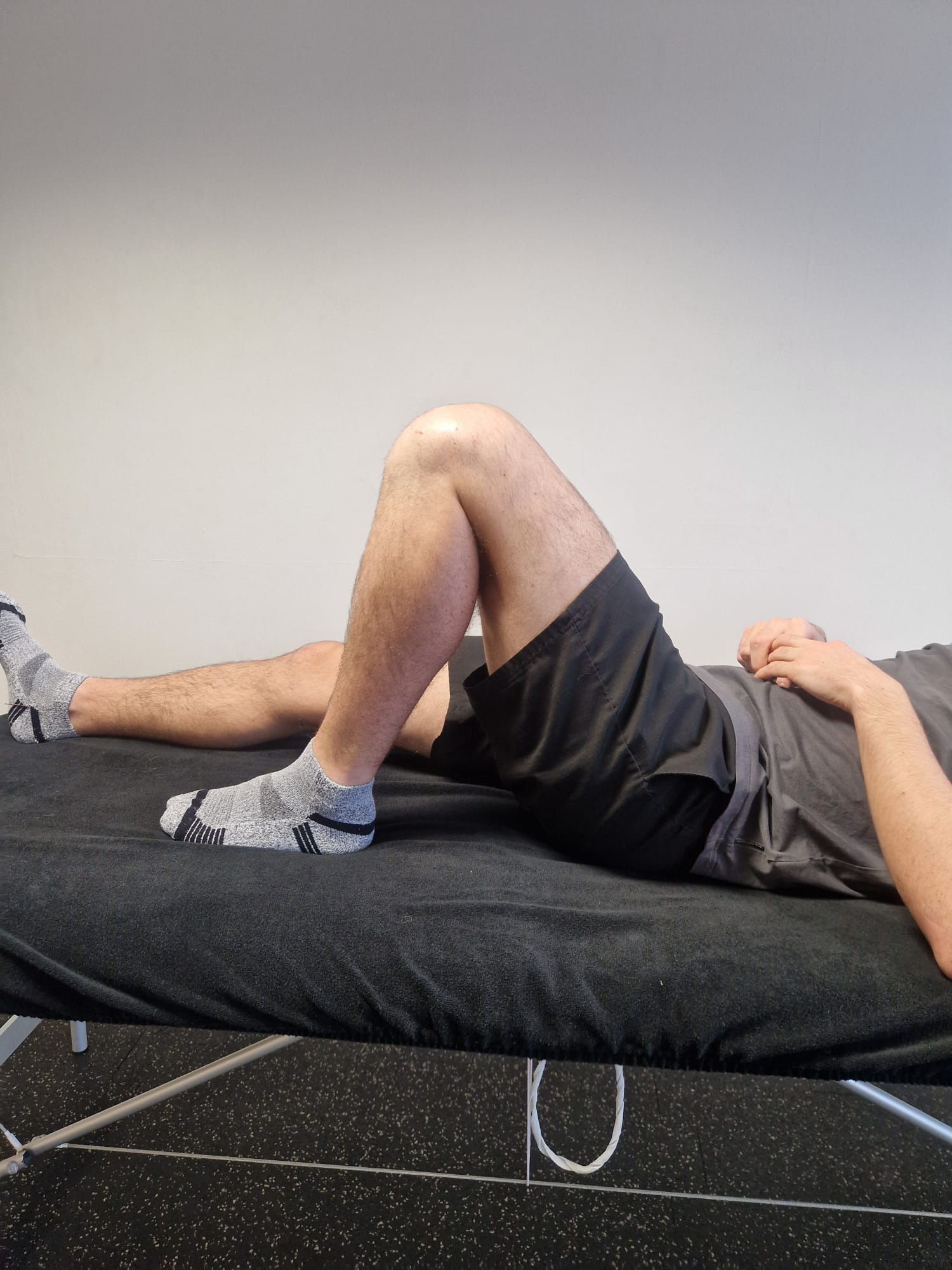
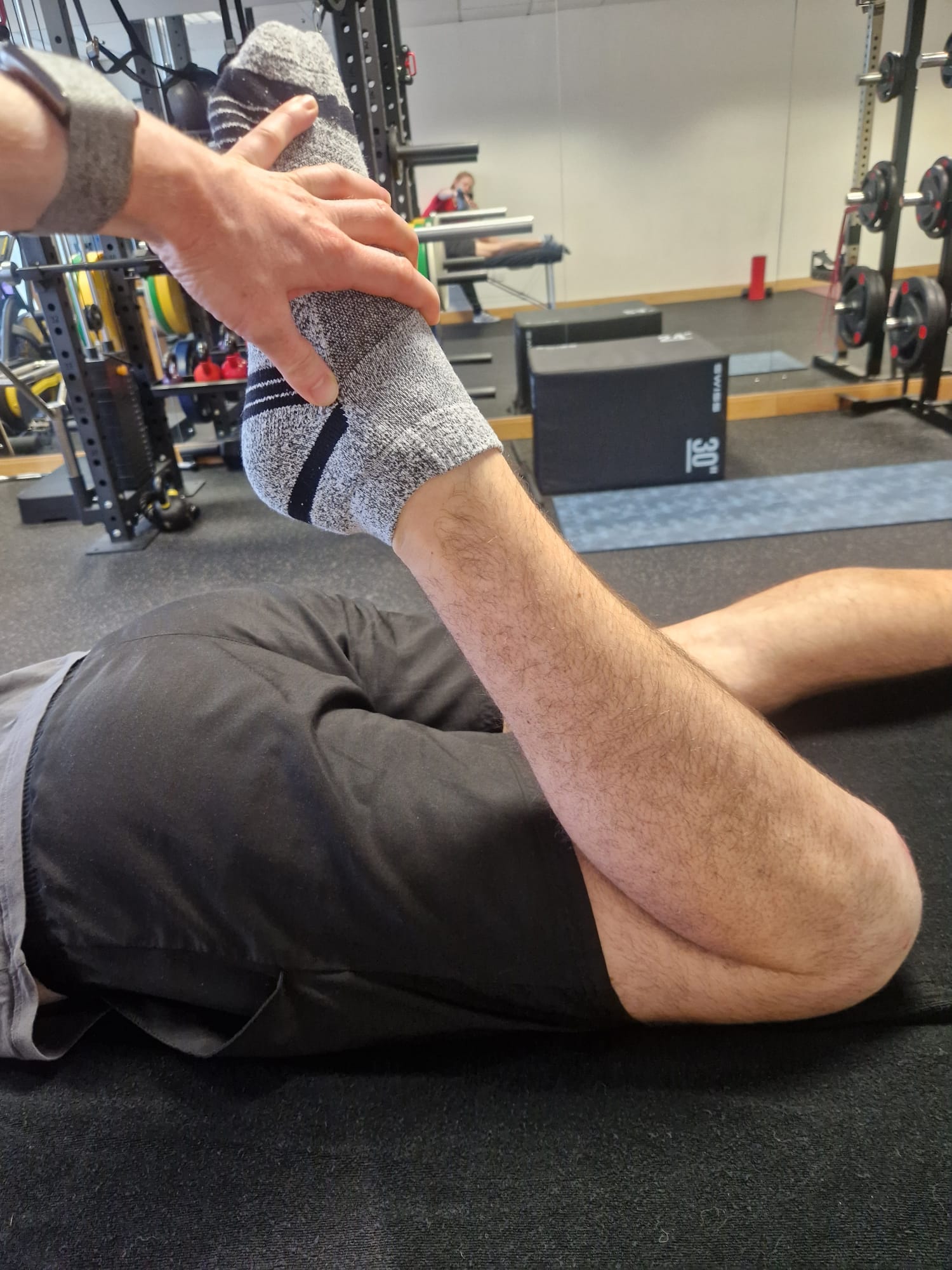
Luke’s range of motion is within good healthy ranges (though not as far as I expect him to finish) as you can see in the photos below.
Squat
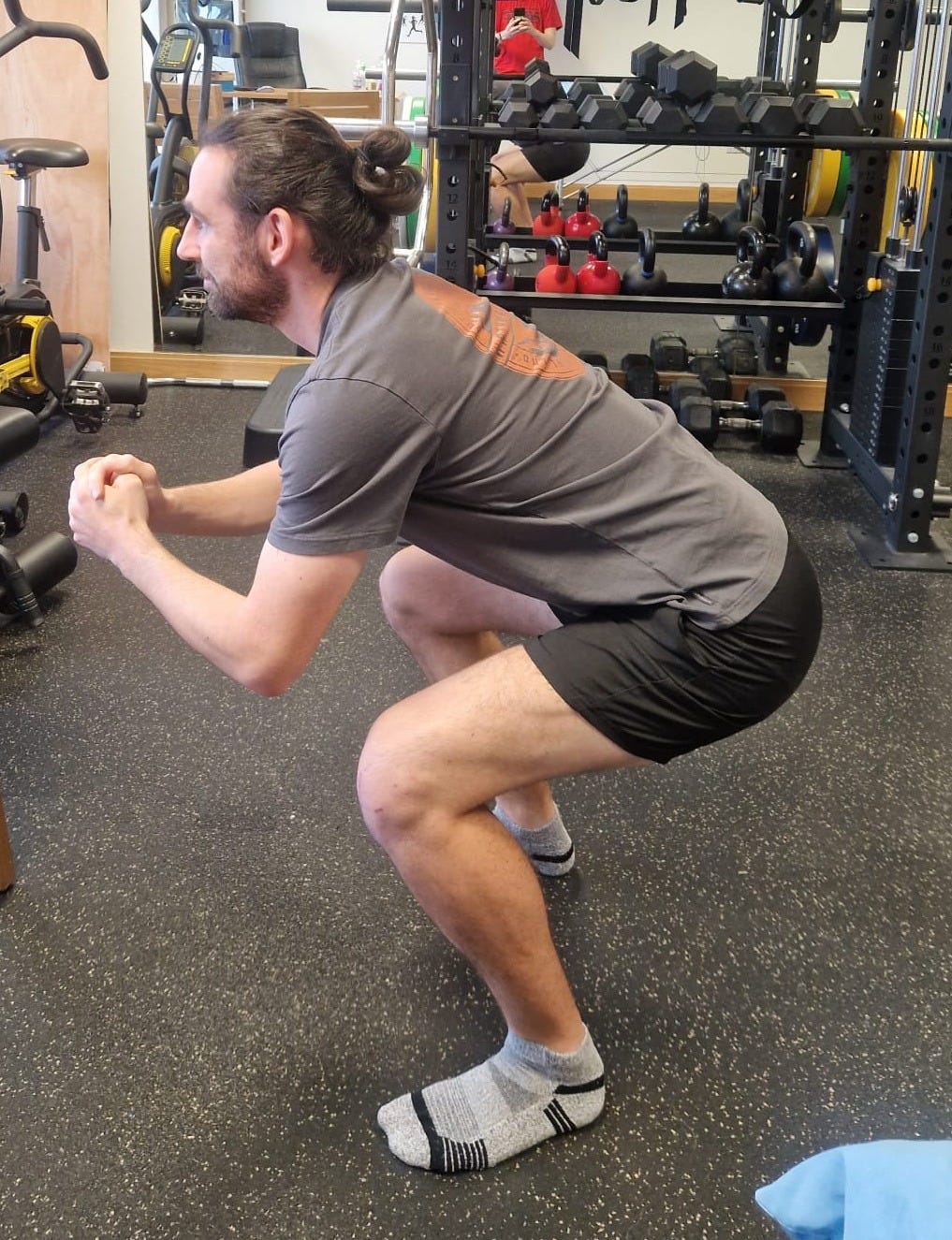
Luke’s squat is starting to balance out - you can still see more left thigh than right (from behind) which indicates a drift to the right leg but it’s a lot closer to where we want him to end up.
Gait
Now for the big one - how is that guarded gait coming along? Much better. :)
There is still a slight limp as he doesn’t quite hold his full weight over the left leg all the way into toe-off but it’s very fluid and much more confident looking.
Session 4 - 11 weeks post-op
Between sessions 3 and 4, Luke’s program included some introductory work for plyometric activities; things like landing practice via drop squats onto 1 leg and A skips for impact tolerance. His next phase included box jumps which was part of the testing in this session - you can see his confidence and ability is in a very good place!
I think it’s useful to note that many of my other clients who may have had faster improvements in their gait and flexibility often wouldn’t be anywhere near starting on the height of this box at this point of the program. Every journey is unique. People get to the same end point but via different routes and timelines.
Luke has not started to run but the plyometric work in this phase is preparing him for it in the next phase.
Stay tuned for part 2 in a couple of months time!
Dislocations really f***ing hurt so his pain levels now made sense to me but visually it was not apparent that the knee had dislocated. I’m not sure the paramedics necessarily could tell either until it popped back into place.